
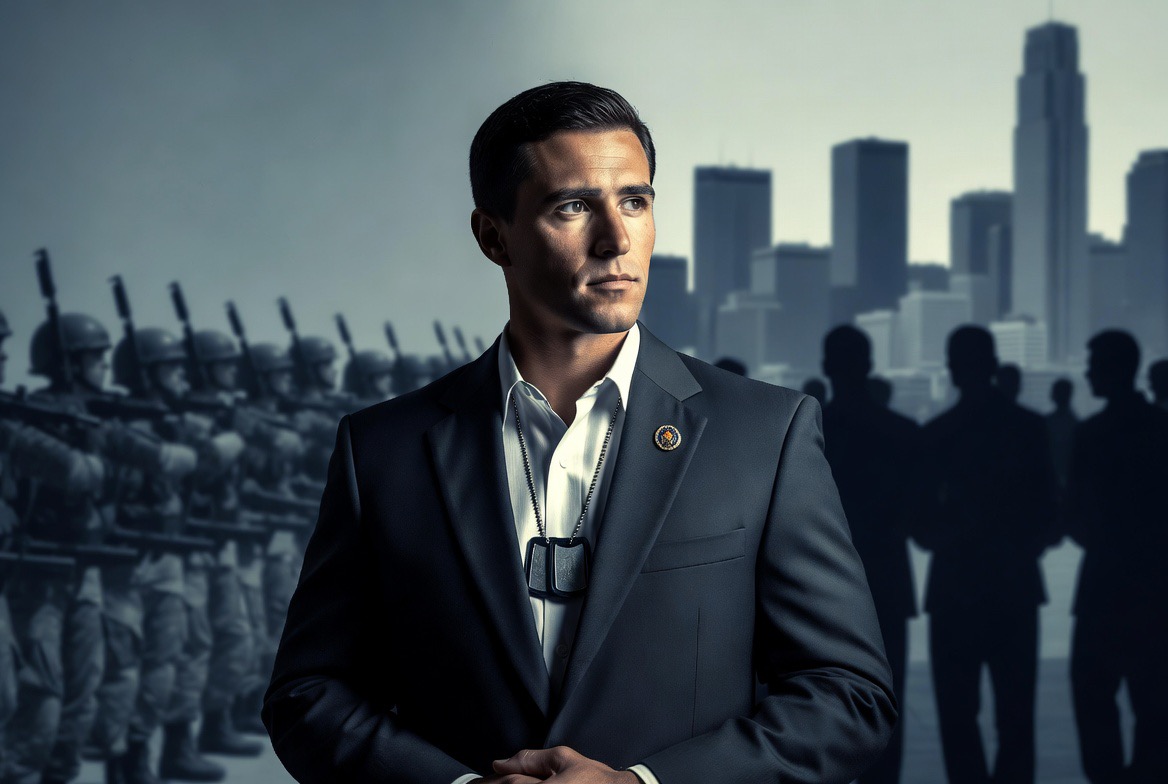
One of the hardest realities of military transition is something few veterans openly discuss: leadership after the military can feel harder than leadership in the military. That statement surprises many people. After all, military leadership often means long hours, immense responsibility, deployments, operational stress, and carrying the weight of other people’s lives and careers. Yet many veterans discover that the most challenging leadership assignment begins after they leave the service. Not because leadership disappears, but because the people we were responsible for do.
For years, I woke up before sunrise, not because I felt motivated every day, but because people were counting on me. Like many Marines, Soldiers, Sailors, and Airmen, I had a formation to attend, a team to lead, standards to uphold, and young men and women who depended on me for guidance. Accountability wasn’t optional; it was woven into the culture and expectations of military life. Looking back, I think many veterans believe they miss the mission after leaving the service. In reality, what we often miss most is the responsibility and significance. The mission gave us purpose, but responsibility gave us identity. Leadership required us to stay disciplined because others depended on us.
Then we transition out. The structure that once shaped our daily lives suddenly disappears. There is no formation. No platoon. No daily accountability. No one expecting us to show up at 0600. No one looking to us for direction. For many veterans, the challenge isn’t simply finding a new career, it’s adjusting to a life where fewer people require our leadership. Over time, that absence can create a void that many struggle to explain. Discipline begins to fade. Purpose becomes harder to define, significance evaporates and identity feels uncertain. Not because veterans are incapable, but because the environment that once reinforced those qualities no longer exists.
Another challenge often emerges during this transition. Many veterans enter civilian organizations and quickly become disappointed with leadership. We encounter managers who avoid accountability, leaders who prioritize personal gain over team success, and organizations that tolerate standards we would never have accepted in uniform. It’s easy to become frustrated and think, “That’s not how we did it in the military.” Sometimes that observation is accurate. But there is a danger in allowing disappointment to turn into cynicism. If we’re not careful, we can become opposed to leadership itself rather than addressing the leadership gap we see around us.
The answer is not to reject leadership. The answer is to become the example. If leadership is weak, become stronger. If accountability is missing, model it. If integrity is rare, live it. If people are lost, lead them. One of the most important lessons military service teaches us is that leadership is not a position it is influence. Influence doesn’t disappear when the uniform comes off. It simply takes on a different form.
Many veterans mistakenly believe their mission ended the day they received their DD-214. The truth is the mission didn’t end; the battlefield just changed. Today, leadership may mean leading your family instead of a fire team. It may mean mentoring a young employee instead of a junior Marine. It may mean serving your community, coaching youth sports, supporting another veteran through transition, or simply showing up consistently for the people in your life. The arena changes, but the responsibility remains.
One of the greatest lessons veterans can learn is that rank and leadership are not the same thing. Rank grants authority, but character earns influence. After military service, influence becomes far more important. People no longer follow because they have too. They follow because they trust you. They follow because they respect your example. They follow because your actions consistently align with your values. That kind of leadership often has a deeper and more lasting impact than any title ever could.
The world desperately needs strong leaders. It needs men and women willing to model discipline, accountability, courage, humility, and integrity. Veterans are uniquely positioned to provide exactly that. The challenge is remembering that leadership did not end when the uniform came off. Someone is still watching. Your spouse is watching. Your children are watching. Your coworkers are watching. Your community is watching. Other veterans are watching. The next generation is watching.
You may no longer stand in front of a formation, but your life is still setting an example. Leadership after military service is no longer about rank. It’s about presence. It’s about influence. It’s about becoming the type of person others can follow long after the uniform comes off. The mission isn’t over. Lead accordingly!!